The other timeline
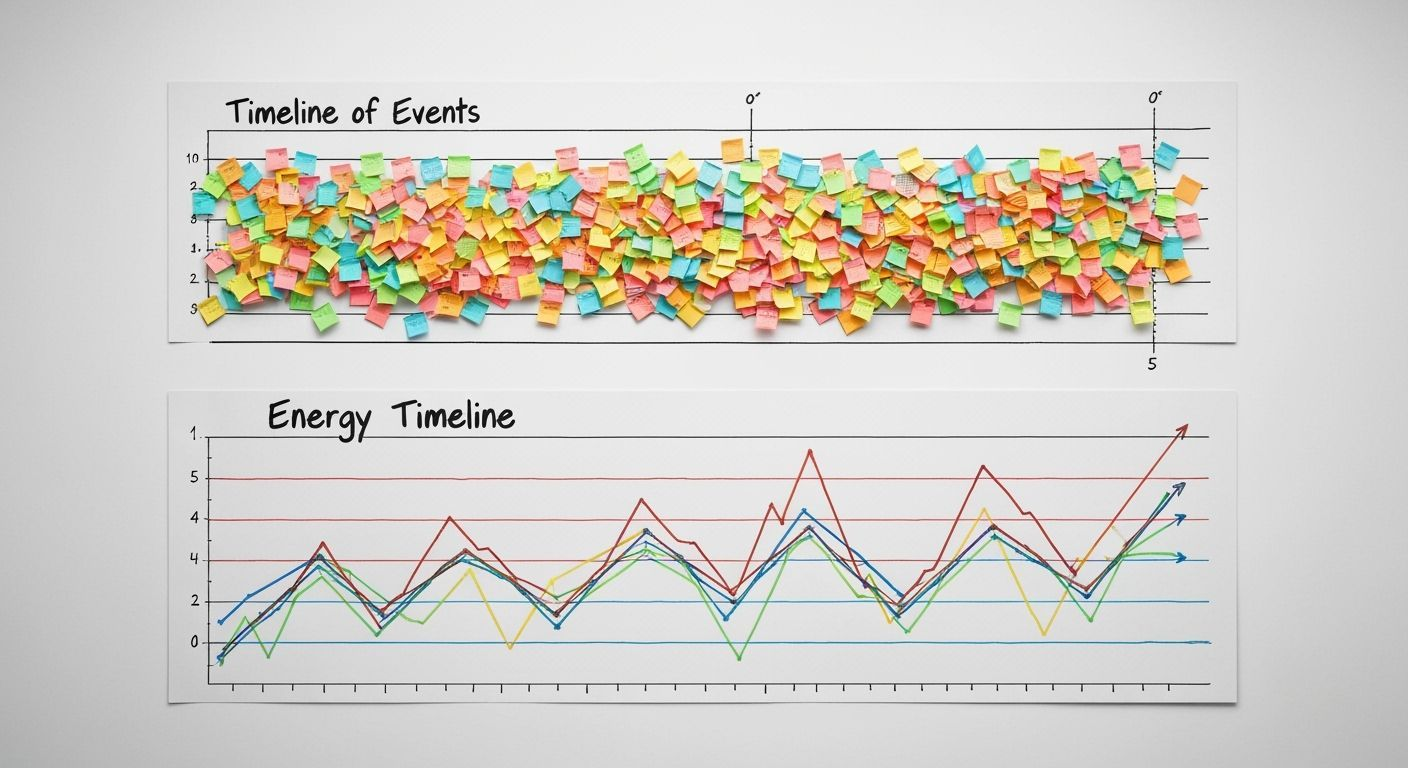
A retrospective usually keeps one record: what happened, in order, milestone by milestone. It reads cleanly, and leaves out much of what the day was like. A decision that shows up in the log as routine may have been, for the people in it, the afternoon everything tightened, and little of that reaches the log.
Running a second timeline alongside it catches some of what the first leaves out: how the energy in the room moved, where it held, where it dropped, where it never quite came back. Laid over the event log, the two rarely line up, and the dips are often where something worth reading sits. They often fall where someone stopped saying what they saw, kept the peace instead of naming a problem, retreated into procedure, or quietly checked out. On the day it passed for professionalism. In the retrospective it can read as the point where a team stopped being straight with itself.
Whether any of that can be looked at has little to do with technique. A retrospective that goes looking for someone to blame usually gets a defensive account and little else. An honest one is fragile, easily lost and slowly rebuilt, and it is likely to survive only where naming a dip costs the person naming it little. Where that safety is missing, the timeline fills with whatever version people can afford to tell.
Reflection afterwards reads better honest than tidy. What is worth acknowledging, plainly, and not as a performance review. What did not work, put as what would have helped rather than as a complaint. What nobody understands yet, named and left unsolved, since a team that can sit with an open question is likelier to hold one under pressure. Whatever turned up along the way that changes the picture. And where to go next, in terms concrete enough to act on.
An event log tells the story an organisation is comfortable with. The other timeline tells the one it might learn from.
The short version
Not every retrospective needs both timelines. After a single exercise or a tabletop, a tight fifteen or twenty minutes is usually enough, held while the afternoon is still warm and before anyone has smoothed it into a tidy story: what went well and which decision produced it, what did not go as expected (which is not the same as what went wrong), one or two things worth doing differently, and one thing to carry into the next session. Written down roughly, not polished. The two are not alternatives. The short version closes an afternoon; the fuller one is for a cycle or a serious incident; run together, the reflection compounds instead of evaporating.
Last updated: 3 July 2026