Distribution networks
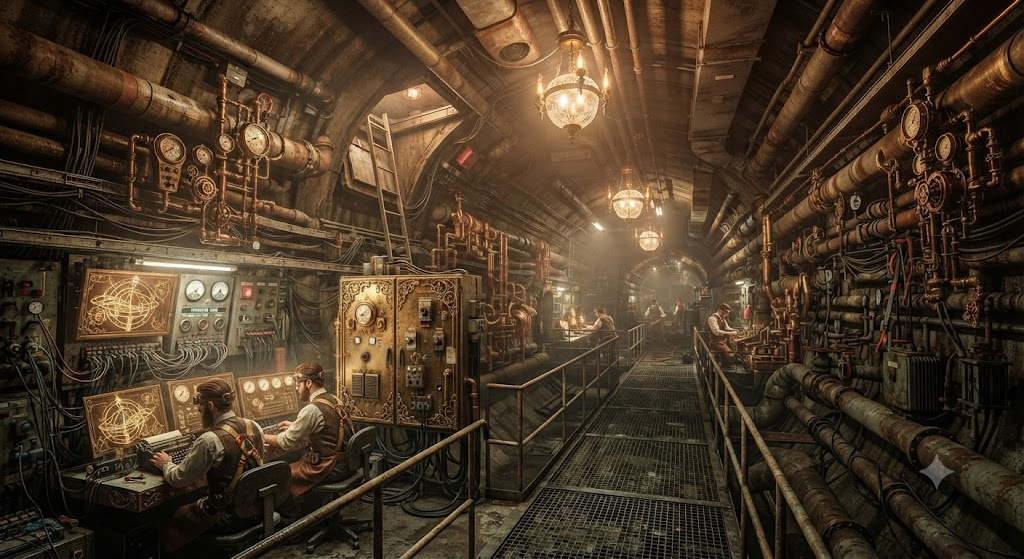
This is a fictional distribution system operator, but not an invented one. It is assembled from open-source intelligence about a real Dutch operator, its vendors, procedures and constraints drawn from job adverts, procurement records, vendor manuals and annual reports into one company with real problems. Its job is to keep electricity and gas flowing from the national grid to the last mile, at a scale where the work is cyber-physical: a protection relay opening fifty milliseconds early is the difference between a contained fault and half a feeder gone, regulation and safety do not bend, legacy equipment refuses to retire, and budgets rarely stretch to doing things properly. Every substation, relay, RTU, SCADA server and historian leaves a trace as it runs, and defending the estate turns on knowing what that trace looks like when the system works as designed, and what changes when something goes wrong or someone is moving quietly through it.
The evidence is the point. Read through a defender’s lens it shows what each system emits and where a legitimate change and an intrusion part company. It also raises a harder question: NIS2 asks an operator to say, inside a day, whether an incident is suspected malicious, which presupposes the estate can tell a malicious change from its legitimate twin at all. Evidentiary capability is that precondition, a property of the record measurable before anything happens.
Last updated: 15 July 2026