From the end, backwards
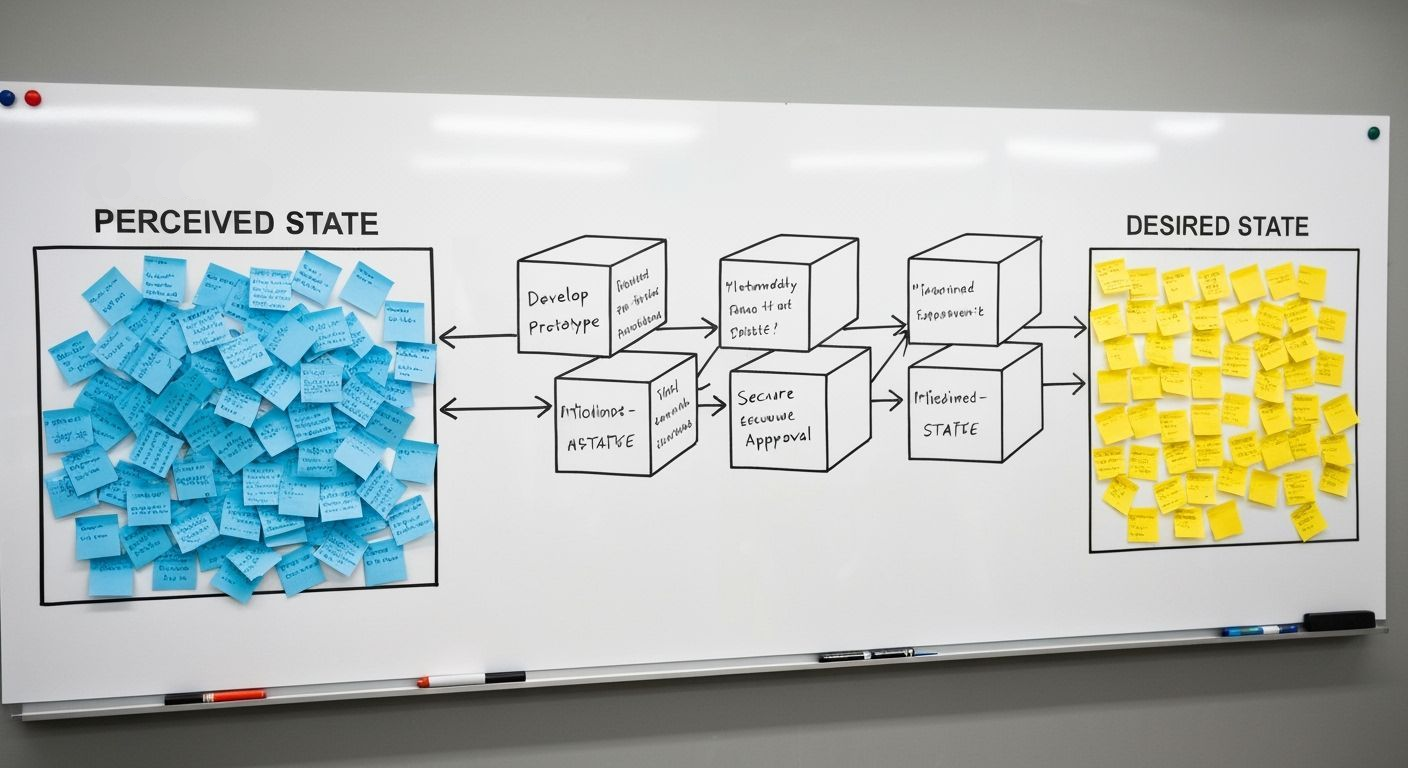
Most planning starts where a team is and pushes forward. Backward planning starts at the finish, a clear picture of what success looks like and how it would be recognised, and works back toward the present. The reversal does something forward planning rarely manages: it exposes the dependencies and the blockers while there is still room to design around them, rather than meeting them one at a time on the way.
Both ends are guesses worth examining. The current state, as a team perceives it, is one model; the desired state is another; and the path between them rests on a run of conditions the plan quietly assumes will hold. Working backwards drags those assumptions into the open, which is where the testing starts: what is believed true now, what success is being taken to mean, and what has to stay true along the way.
The obstacles worth the most attention are the human ones, and they are the ones most often left out. Who will resist this, and why. Whose co-operation the plan needs and does not yet have. Where the energy will be lowest, and what the plan asks of people exactly there. Naming an obstacle before it appears does not remove it, and many cannot be removed; it is the difference between having thought through a response and improvising one under pressure. These belong in the plan, not in the retrospective that later explains why it stalled.
Last updated: 3 July 2026