Asset base and constraints
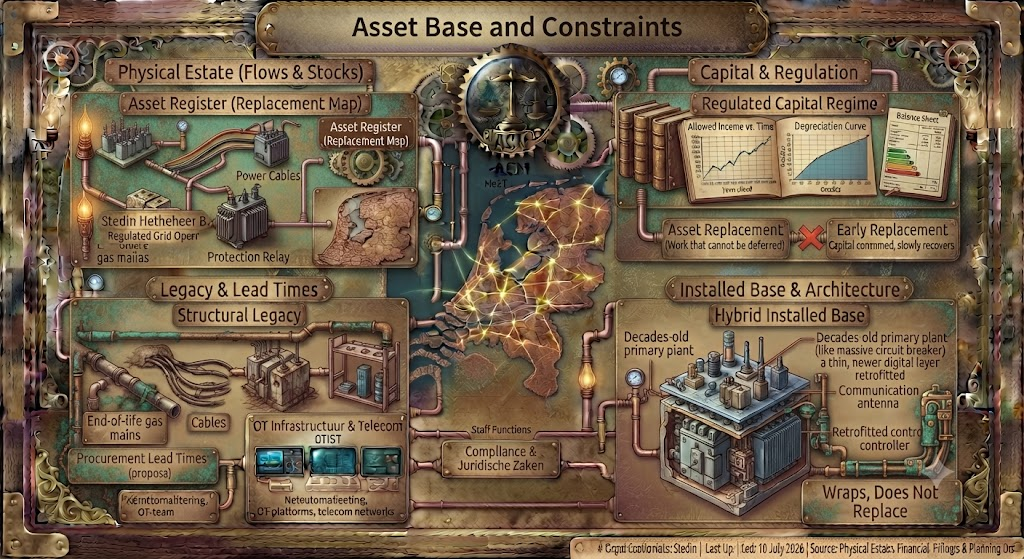
The binding fact about the estate is that most published numbers are annual flow, not installed stock, so the model anchors on the two figures reported cleanly, roughly 26,500 distribution substations and 2.3 to 2.4 million connections, with network lengths taken from the open GIS data rather than the prose. Over that estate sits a regulated-capital logic that explains the engineering: allowed income and returns are set years ahead, cost recovery for a replacement arrives slowly through decades of depreciation, and the balance sheet is held to an investment-grade rating. Under those conditions imperfect but functional solutions stay in service, because replacing them early consumes capital that recovers slowly and competes with work that cannot be deferred.
Legacy is structural rather than incidental. End-of-life gas mains, cables and substations reach replacement age together, spare-part scarcity is chronic, and procurement lead times force multi-year planning, a high-to-medium-voltage substation running three to seven years from proposal to commissioning against masterplans that reach to 2050. The installed base is genuinely hybrid, decades-old primary plant instrumented with a thin, newer digital layer. Together, capital and legacy account for the architecture more cleanly than any design choice does: the network wraps rather than replaces, and the evidence surface it emits is uneven across an estate of very different ages.