Operations and cadence
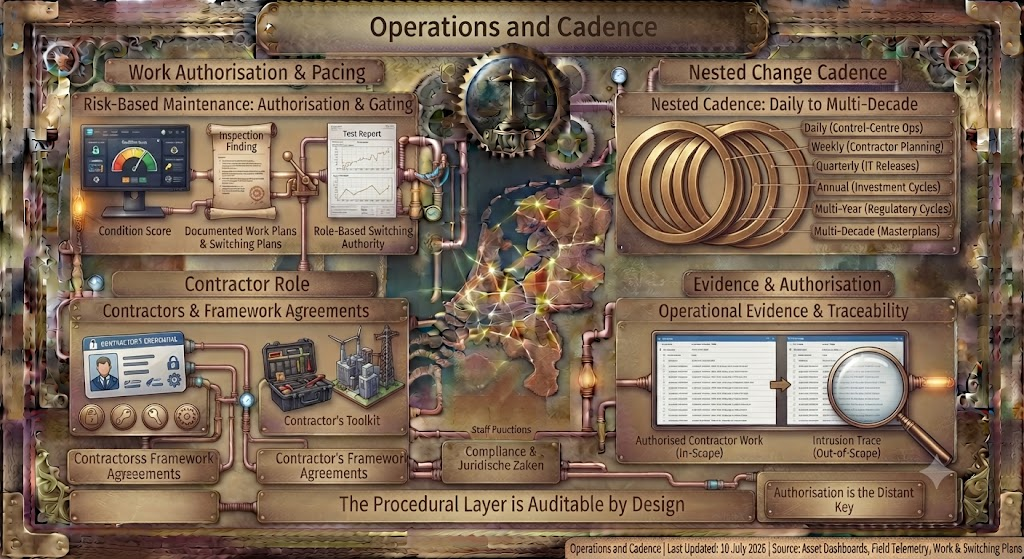
The pressure on operations has migrated from capital to execution: money is now largely available, but permits, physical space, materials and above all qualified people are the limiting reagents, and congestion is already rationing new connections. Against that, maintenance is shifting from fixed intervals toward risk-and-condition-based work, and the philosophy predicts its own evidence, condition scores, inspection findings and test reports tracked against plan. Work is gated through documented work plans and switching plans created digitally before execution, with role-based switching authority and formal release sessions, so the procedural layer is auditable by design.
Change runs on a nested cadence, daily control-centre operations, weekly contractor planning, quarterly IT releases, annual investment and multi-year regulatory cycles, multi-decade masterplans, with the outer clock set by the five-yearly ACM method decision and the two-yearly investment plan. Contractors do much of the hands-on build and maintenance under long-term framework contracts, so they create the bulk of the operational evidence and concentrate access across several systems. The consequence that runs through the group is that the operational record turns on authorisation and scope: the routine and the malicious leave much the same traces, so what the evidence settles is not whether something changed but whether it was allowed to.